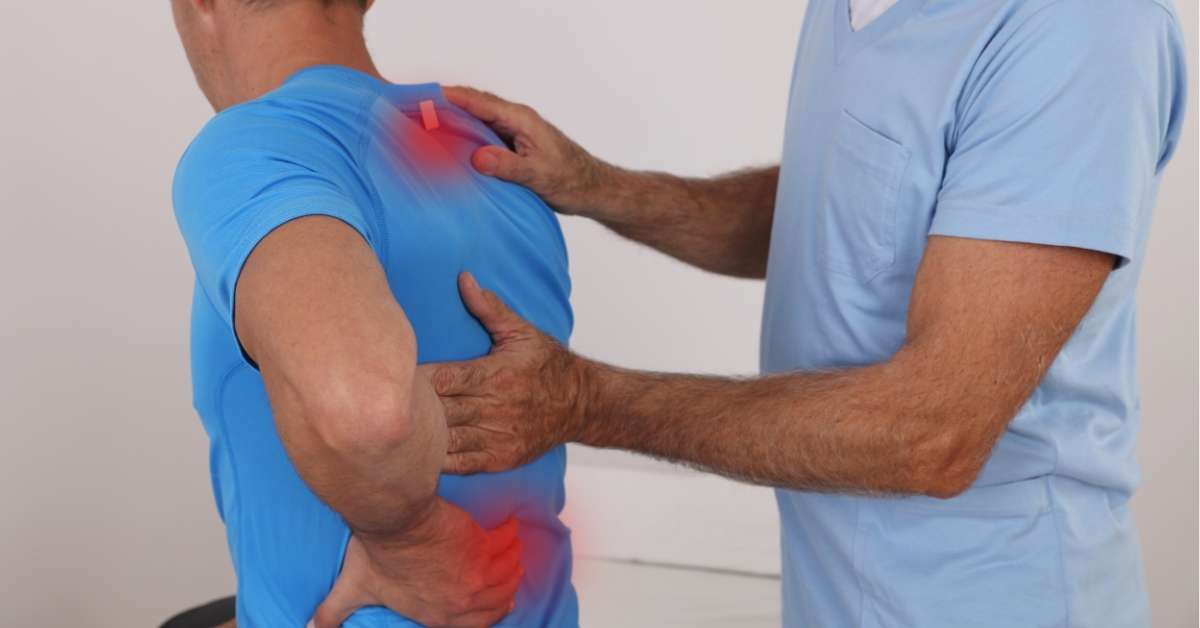
Low back pain is extremely common and remains one of the most prevalent health issues in the United States, including right here in Jacksonville, FL. Each year, there are an estimated 2.06 million episodes of low back pain, with over $200 billion spent on interventions and treatments.
Unfortunately, many of these treatments may be ineffective or unnecessary, largely due to widespread misconceptions and back pain myths that continue to circulate both online and in clinics. These false beliefs often lead to fear-avoidance behaviours, a negative mindset, and decreased activity, all of which can make back pain worse.
Recent studies, including those published in 2024 and 2025, reinforce that lower back pain is a complex, multi-dimensional condition. It is not solely biomedical but is influenced by psychological, emotional, cognitive, and social factors.
What is Low Back Pain?
Low back pain refers to discomfort or soreness felt in the lumbar region of the back, which is the area between your ribs and legs. The pain can range from a dull, constant ache to a sudden, sharp sensation. It can be triggered by various factors, including muscle strains, injuries, or underlying conditions.
Here are 10 myths and 10 facts about low back pain
Myth 1: Low back pain is usually a serious medical condition
Fact: We see that most cases of low back pain in Jacksonville and elsewhere are not life-threatening. It can be disabling, but serious medical conditions are rare.
Myth 2: Low back pain worsens with age
Fact: Aging doesn’t necessarily lead to more pain. Many older adults show spine degeneration on imaging but experience no symptoms.
Myth 3: Persistent pain always means tissue damage
Fact: Pain that continues beyond 3 months is rarely due to ongoing tissue damage. Often, stress, poor sleep, or lifestyle factors are involved.
2024 Update: A narrative review published in Bulletin of Faculty of Physical Therapy (Oct 2024) reinforces that structural “damage” rarely explains chronic pain, and people often improve with education, movement, and reassurance.
Myth 4: Scans are necessary to understand the cause
Fact: Imaging findings (e.g., disc bulges, arthritis) are common in people with no pain. Scans are only recommended in certain red-flag cases.
Myth 5: Pain during movement means you’re causing harm
Fact: Movement may feel uncomfortable, but it’s usually safe. Gradual activity is one of the most effective low back pain treatments.
Myth 6: Poor posture causes back pain
Fact: There is no “perfect” posture. The best approach is regularly changing positions and moving in ways that feel comfortable.
Myth 7: Weak core muscles cause low back pain
Fact: A “weak core” is not a cause of pain. In fact, people often tense their core excessively during pain, which may increase discomfort. Strength is helpful but over-bracing is not.
Myth 8: Repeated bending or lifting wears out your spine
Fact: Like muscles, the spine adapts to load. Gradual loading (lifting, bending, running) makes your back stronger, not weaker.
Myth 9: Pain flare-ups mean injury and need rest
Fact: Flare-ups are usually driven by stress, poor sleep, or inactivity – not new injury. Staying active helps recovery.
Myth 10: Surgery, injections, and medication are the best treatments
Fact: These can be helpful in rare cases, but they’re often not the most effective first-line options.
Treatments like education, graded exercise, stress management, and cognitive strategies show better long-term results.
Non-invasive strategies such as education, movement, and gradual activity are often safer and more effective long-term options for managing persistent lower back pain compared to injections, surgery, or strong medications.
FAQ About Low Back Pain
When should I see a doctor for low back pain?
Consult a doctor if your back pain is severe, persistent (lasting more than a few weeks), or accompanied by other symptoms like numbness, weakness, fever, or bowel/bladder problems.
What are some effective ways to manage low back pain at home?
Gentle exercises, stretching, heat or ice application, over-the-counter pain relievers, and maintaining good posture can help manage low back pain at home.
Can stress and anxiety contribute to low back pain?
Yes, stress, anxiety, and emotional distress can contribute to muscle tension and pain, including low back pain. Managing stress through relaxation techniques or therapy can be beneficial.
Hopefully this post helps paint a clearer picture of a lot of the confusing myths and beliefs about back pain.
If you’ve been dealing with low back pain for a while, contact us today so that we can help create a roadmap to success and a detailed plan to get you back to your valued life goals!
At our physical therapy clinic, we take a personalized, non-invasive approach to low back pain – combining movement, education, and practical strategies to help you feel better and move confidently again.
Reference:
- O’Sullivan PB, Caneiro JP, O’Sullivan K, et al. Back to Basics: 10 facts every person should know about back pain British Journal of Sports Medicine 2019.
- Bulletin of Faculty of Physical Therapy