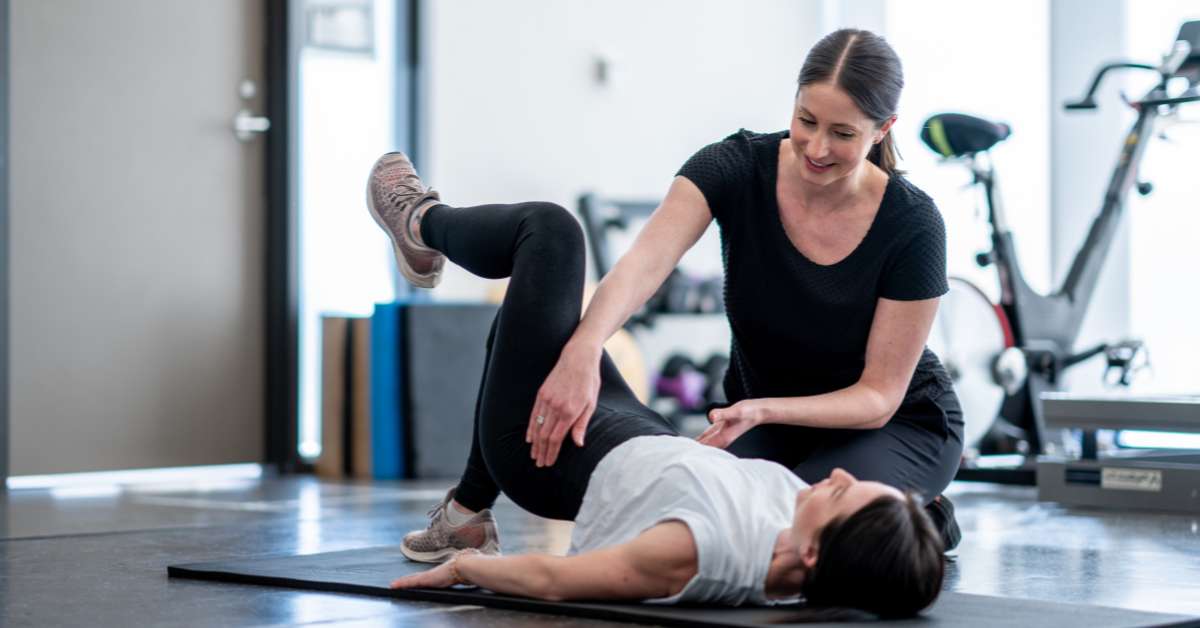

When you hear “Pelvic floor vs. Kegel exercises,” it can sound like two separate programs you’re supposed to juggle. In reality, most people are told, “Just do Kegels,” with no real check on whether that advice is suitable for their body.
Sometimes it helps. Sometimes it makes symptoms worse.
If you’ve dealt with leaking when you laugh or jump, pressure “down there,” or pain with day-to-day activity, you already know this isn’t just a bathroom issue.
It affects training, sex, confidence, and how you navigate your day.
So let’s sort out what the pelvic floor actually is, where Kegels fit in, and when it’s time to stop guessing and get real help.
KEY POINTS
The pelvic floor is a complex muscle group involved in bladder, bowel, movement, and sexual function, not just continence.
Kegels are a strengthening exercise, but they are not appropriate for every pelvic floor issue.
Some pelvic floor symptoms are caused by tension or poor coordination, and Kegels can make these worse.
Pelvic floor therapy employs a comprehensive approach, encompassing assessment, relaxation, coordination, and targeted strengthening as needed.
A proper evaluation helps determine the right treatment instead of relying on generic Kegel advice.
What Is the Pelvic Floor, Really?
The pelvic floor is a group of muscles and connective tissues at the base of the pelvis. These structures:
- Support the bladder, bowel, and in many people, the uterus
- Contribute to continence (holding and releasing urine and stool)
- Help manage pressure during coughing, lifting, and exercise
- Play a role in sexual function and comfort
Pelvic floor problems can arise from:
- Reduced strength
- Excessive tension
- Poor coordination with breathing, abdominal muscles, and hip muscles
- A history of pregnancy, childbirth, surgery, or long-term straining
Because of this, two people with “pelvic floor issues” may need very different treatment plans. One may require strengthening, another may first need to reduce tension and improve coordination before adding any load.
What Are Kegel Exercises?
According to the National Library of Medicine, Kegel exercises are repetitive contractions and relaxations of the pelvic floor muscles. The usual instruction is to tighten the muscles used to stop urine or gas, hold, then relax.
Research and clinical practice use Kegels for:
- Stress urinary incontinence (leakage with cough, laugh, or impact)
- Some cases of pelvic organ prolapse
- Pelvic floor weakness after pregnancy, childbirth, or pelvic surgery
Kegels target strength and endurance. That makes sense when the muscles are underactive and cannot generate enough force or maintain a contraction.
When the muscles are already overactive, painful, or unable to relax, repeated contractions can increase symptoms. The key point: Kegels are a strengthening tool, not a universal solution.
Pelvic Floor Work vs. Kegels
Kegels are a single exercise method. Pelvic floor therapy is a broader clinical approach that may include or exclude Kegels depending on the findings.
Scope
- Kegels: Focus on voluntarily contracting and relaxing the pelvic floor muscles.
- Pelvic floor therapy: Can involve internal and external manual techniques, relaxation strategies, breathing drills, strength and coordination work for the hips and trunk, and education about bladder and bowel habits, load management, and activity modifications.
Muscle Status
- Kegels: Assume that weakness is the primary problem.
- Pelvic floor therapy: Starts by determining whether the muscles are weak, overactive, poorly coordinated, or some combination of these. Strengthening is used only when it matches the actual dysfunction.
Assessment
- Kegels: Commonly started without formal assessment, based on general advice or brief instructions.
- Pelvic floor therapy: Uses a structured evaluation that may include detailed history, movement testing, and, where appropriate, internal examination of pelvic floor muscle tone, strength, and control.
Long-term Effect
- Kegels: May improve symptoms when performed consistently, but often do not address hip strength, breathing, spine mechanics, or lifestyle factors that contribute to the problem.
- Pelvic floor therapy: Aims to integrate pelvic floor function into everyday movement, sports, lifting, and bowel/bladder routines, which tends to support more durable results.
When Are Kegels Appropriate, and When Are They Not?
Kegels can be beneficial in certain situations, particularly when weakness is confirmed. They are more likely to be appropriate when:
- Leakage occurs with cough, sneezes, laughs, jumps, or lifting
- A pelvic floor or women’s health specialist has identified low strength or poor endurance
- There is no pelvic pain, pain with intercourse, or difficulty emptying the bladder or bowel
Kegels may be unhelpful or aggravating when:
- There is pelvic, vaginal, rectal, or deep hip pain
- Intercourse, vaginal exams, or tampon use are painful
- Starting the urine stream is difficult, or the bladder does not feel fully empty
- Constipation, straining, or a constant “tight” sensation in the pelvic region are present
In those cases, relaxation, down-training, and coordination work usually take priority over strengthening. Only after tension is reduced and movement improves does it make sense to add targeted strengthening for many patients.
Looking for the best physical therapy clinic for pelvic floor concerns means finding a provider who does more than hand out generic Kegel instructions.
A good clinic listens to the history, performs a detailed assessment, and matches treatment to both the findings and the person’s activity level, whether that involves daily tasks, running, lifting, or sports.
Work With a Pelvic Floor Therapist?
Pelvic floor muscles are not visible, and many people find it difficult to know if they are contracting or relaxing the correct structures.
Self-guided routines often overlook key details, such as breathing strategies, abdominal bracing, or hip positioning, that can impact symptoms.
Motion Rx offers one-on-one pelvic floor and musculoskeletal care for individuals seeking both symptom relief and improved function in daily life and sports.
Sessions include focused time with a physical therapist who can assess pelvic floor status, hip and core strength, and movement patterns that may be driving symptoms.
FAQs
Are pelvic floor exercises and Kegels the same thing?
No. Kegels are one type of pelvic floor exercise focused on strengthening. Pelvic floor therapy is broader and may include relaxation, coordination, breathing, and strength work depending on what your muscles actually need.
Can doing Kegels make symptoms worse?
Yes. If your pelvic floor muscles are already tight, painful, or unable to relax, repeated Kegels can actually increase discomfort, pain, or voiding issues instead of alleviating them.
How do I know if Kegels are right for me?
Kegels are most helpful when true weakness is confirmed. A pelvic floor assessment can determine whether you need strengthening, relaxation, or a combination—rather than guessing on your own.