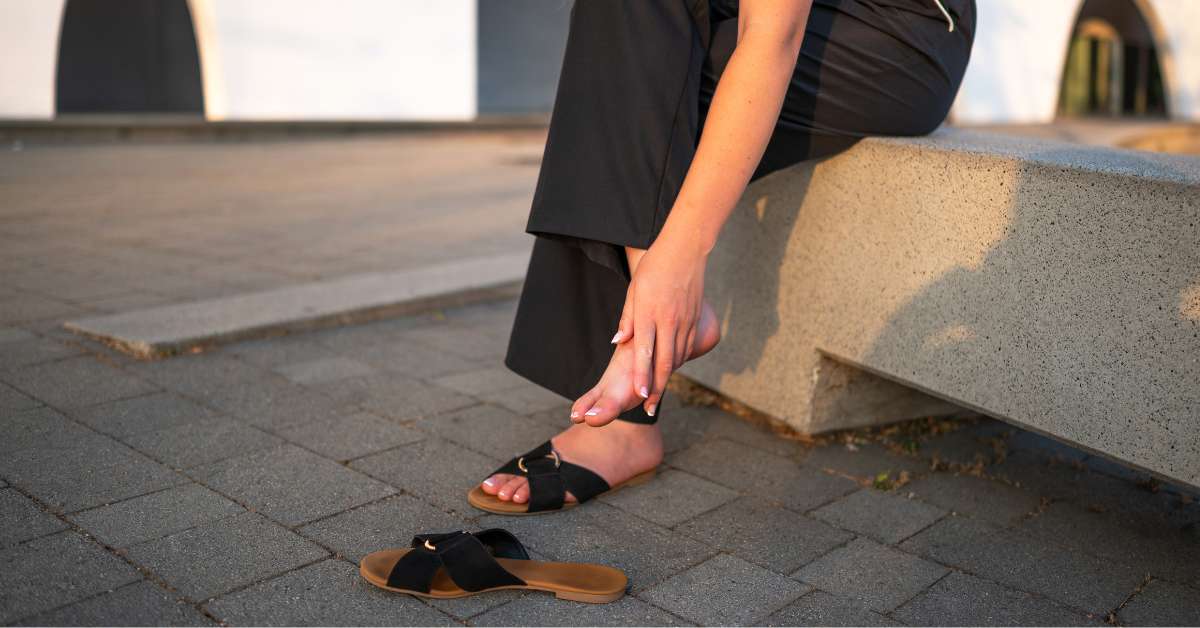

People often ask, is foot pain normal after walking, especially after a long day on hard floors or a big jump in daily steps? Mild soreness may occur occasionally.
However, ongoing or sharp pain that keeps coming back is not just “getting older”; it is usually your body flagging a problem that needs attention.
If you’re unsure when soreness is harmless and when it indicates the need for help, continue reading and compare your symptoms as you progress.
KEY POINTS
- Short-lived, mild soreness after unusually long walks can be expected; recurring, sharp, or one-sided pain is not “normal.”
- Where the pain sits (heel, arch, ball, toes), how long it lasts, and what makes it worse help point toward the cause and the right next step.
Common Reasons Your Feet Hurt After Walking
A bit of soreness after a longer-than-usual walk, new shoes, or a day on hard floors that settles within a day or two is usually just simple muscle fatigue.
According to the NHS, experiencing foot pain after walking often stems from a combination of factors, including load, footwear, and individual anatomy. A few frequent culprits:
Overuse and Irritation
Your feet take forces of two to three times your body weight with each step.
Long days on your feet, sudden spikes in daily steps, or standing for work all day can irritate joints, tendons, and soft tissue, especially if you have extra body weight or poor footwear.
Plantar Fasciitis (Heel and Arch Pain)
Many walkers with bottom-of-foot pain turn out to have plantar fasciitis.
Pain tends to sit near the heel or along the arch, often at its worst with the first steps in the morning or after sitting, then easing as you move.
The problem involves irritation of the thick band that runs from heel to toes.
Ball-of-Foot Overload
Burning or sharp aching in the ball of the foot after long walks can point toward metatarsalgia or a nerve irritation, such as Morton’s neuroma.
People often describe the feeling as “walking on a pebble.”
Tight or high-heeled shoes, as well as excessive forefoot loading, increase the risk.
Foot Structure and Shoes
Flat feet, very high arches, or toes that crowd the front of the shoe can all alter how pressure is distributed under the foot.
When that meets thin soles, worn-out cushioning, or fashion shoes, the soft tissues on the bottom of the foot work harder and start to protest.
Medical Conditions That Add Risk
Some health problems make foot pain after walking more likely or more serious, including:
- Osteoarthritis in the foot or ankle
- Diabetes, especially with nerve changes
- Gout
- Circulation problems
Individuals with diabetes or known nerve issues should have lower thresholds for seeking medical care when new foot pain develops.
Signs That Your Foot Pain After Walking Is Not Normal
Foot pain moves into “get checked” territory when you notice:
- Pain that lasts more than two weeks without clear improvement
- Pain so strong that you limp or avoid putting weight on the foot
- Sudden swelling, warmth, or redness in one area
- A visible change in foot shape or a sense that something “snapped” at the time of injury
- Numbness, tingling, or burning on the bottom of the foot
- Any new foot pain if you live with diabetes
Those signs raise concern for problems like stress fractures, significant soft-tissue injury, nerve issues, or infection, all of which need medical review.
How Can Physical Therapy Help Persistent Foot Pain?
When foot pain keeps returning after walks, the goal shifts from short-term relief to finding out why your feet are overloaded. A physical therapist can:
- Look at foot posture, gait, and overall alignment
- Test strength and flexibility from the hips down to the toes
- Identify whether plantar fascia, tendons, joints, or nerves are driving the pain
- Build a plan that mixes load management, targeted exercises, and shoe or insole advice
That mix often reduces pain and builds resilience, so normal walking no longer sets symptoms off. If you are comparing options and want guided rehab rather than just medication or rest, a clinic with strong musculoskeletal and gait expertise is a sensible next step.
Don’t Wait for Foot Pain to Become a Bigger Problem
Foot pain that keeps showing up after walks is not just an annoyance. It is your warning that something in the way you move, stand, or load your feet is breaking down under stress.
Waiting months while you ice, stretch, and swap shoes without a clear plan can turn a simple issue into a longer-lasting problem.
At Motion Rx, you work one-on-one with a physical therapist who looks at how your foot moves, how you load it on hard floors or hills, and what your current strength and mobility actually are.
You leave with a clear plan for pain relief, better support, and gradual conditioning so walking feels like a normal part of your day again, not something you have to brace for.
FAQs
How long should foot pain last after a long walk?
Soreness that eases within 24 to 48 hours and gets better each day usually points to simple fatigue. Pain that stays the same or worsens over several days, or keeps returning with shorter walks, needs a professional look.
Is it safe to keep walking if my feet hurt?
Light, short walks are often fine if pain stays mild and does not change your stride. Pain that makes you limp, avoid putting weight on part of the foot, or stop early means you should cut back and get checked.
Do I need new shoes if my feet hurt only after walking at work?
Quite often, yes. Worn soles, poor arch support, or a narrow toe box can all stress the bottom of the foot over hours of standing and walking. If workdays always trigger pain, review both your shoes and how old they are.