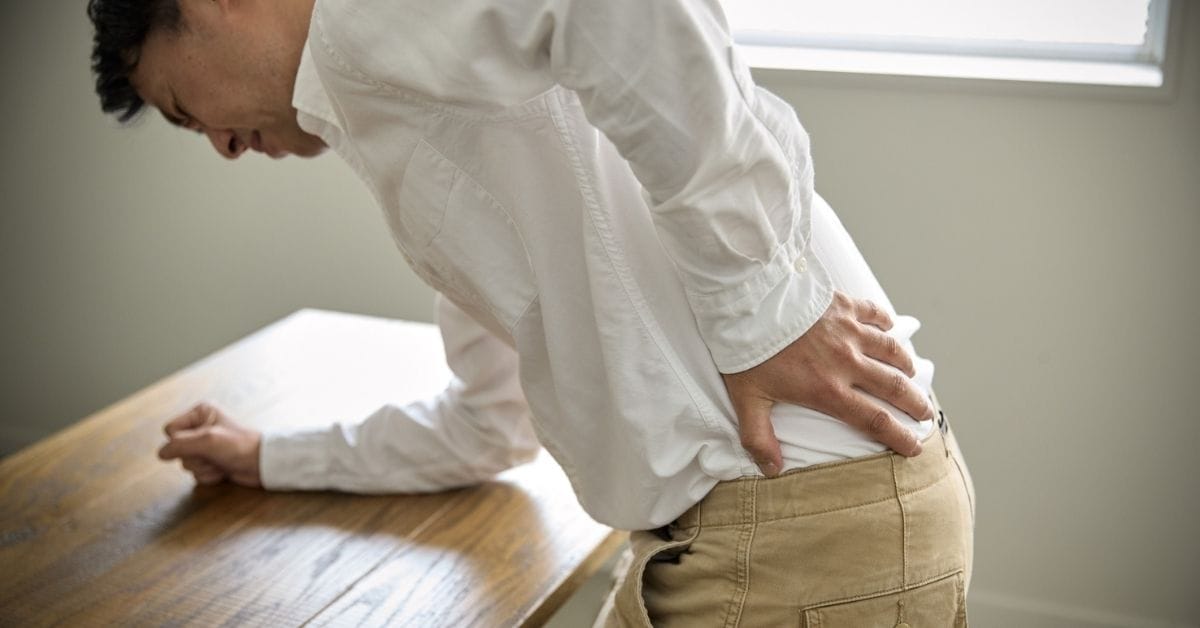

If your back hurts every time you stand up too fast, or you find yourself pushing off your knees to get out of a chair, weak core muscles are probably part of the story. The harder question is whether your core is actually weak or just out of practice.
Most blogs treat weak core muscles like a strength problem. Do more planks and hold them longer; problem solved. The research and the way actual physical therapists work tell a different story. The fix is rarely just “more reps.”
Here is what is really going on, what to watch for, and how to retrain a core that has quietly checked out.
KEY POINTS
- Most “weak core muscles” are not weak in the literal sense. The deep muscles that protect your spine, mainly the transverse abdominis and multifidus, often fire late or not at all, especially after back pain, pregnancy, or long stretches of sitting.
- The fix takes targeted retraining, not endless crunches. Peer-reviewed evidence shows real improvement in pain, posture, and function within four to twelve weeks of the right program at the right dose.
How to Tell Your Core Isn’t Doing Its Job
A weak core rarely shouts. It shows up in small, everyday signals. Watch for these:
- Low back pain that flares after sitting, standing, or carrying anything for a while
- The need to push off your knees to stand up from a low chair
- A belly that pushes out when you bear down, lift, or do crunches
- Breath that catches every time you lift something heavy
- Trouble balancing on one leg for thirty seconds
- Posture that drifts into a slouch within minutes of sitting down
- Hip flexor tightness that never releases, regardless of how much you stretch
If two or three of those sound like you, your core is not pulling its weight. That is true even if you train regularly.

Why Your Core Got Weak in the First Place
The causes of weak abdominal muscles are rarely a single mistake. They are stacked over time. The most common patterns:
- Long hours sitting, which lets the deep stabilizers go to sleep while your hip flexors do their job
- A past low back injury or flare, which teaches your nervous system to brace and grip instead of using the deep core
- Pregnancy and postpartum changes, which stretch and weaken the abdominal wall and pelvic floor
- Shallow chest breathing that bypasses the diaphragm, which is part of your core
- Heavy reliance on your hip flexors and quads, which mask a quiet core for years
- A return to hard training too fast after illness or surgery without rebuilding the basics
The result is the same. Your deep core stops firing on time, your back and hips overwork, and you blame your fitness when it is actually your wiring.
Weakness vs. Motor Control: The Real Problem
Most articles skip the part that follows. Weak core muscles fall into two different buckets, and they need different fixes.
According to a 2021 systematic review in the Journal of Functional Morphology and Kinesiology, people with chronic low back pain show delayed or decreased activation of the deep core, specifically the transverse abdominis and multifidus.
The muscles are not always weaker in terms of strict force. They just turn on late.
Late activation is the real problem because your deep core is supposed to brace your spine before you move your arms or legs. When that timing slips, your back ends up catching the load instead.
The pain you feel after carrying groceries is not your back failing. It is your core not showing up to work on time.
That is why telling someone with weak abdominal muscles to “do more planks” often does nothing. The plank trains the wrong layer at the wrong moment if the deep system never wakes up first. A trained one-on-one PT can read the firing patterns you cannot feel on your own and rebuild the timing first.
Three Quick Self-Tests You Can Do at Home
You do not need a clinic to get a read on your core. Try these three.
1. Single-Leg Balance Test
Stand barefoot on one leg with your eyes open. Time it. Less than 30 seconds means your core and hips are not stabilizing well.
2. Dead Bug Hold
Lie on your back, knees and hips at 90 degrees, and arms straight up. Press your lower back flat against the floor. Slowly extend one leg toward the floor. If your back arches off the floor or you have to hold your breath, your deep core is not engaging.
3. Bridge With Foot Lift
Bridge up into a glute bridge. Hold the position. Pick one foot off the floor without your hips dropping or rotating. If they shift even an inch, your core is not stabilizing your pelvis under load.
Two or three failed tests are your starting point, not a verdict. It tells you what to work on.
Why Crunches and Sit-Ups Are Not the Answer
Crunches train spinal flexion under load. Hundreds of reps of that pattern grind the lumbar discs without building the deeper stabilizers that actually protect your back. The result for most people is lower back pain, not less.
The fix for weakened stomach muscles is to rebuild the firing pattern first, then load the system once the wiring is back online. Do that, and most people are surprised at how quickly the planks they could not hold last month suddenly feel easy.

How to Actually Fix Weak Core Muscles
Real progress comes from the right exercises, at the right dose, for long enough. The research-backed answer looks like this:
| Variable | Target |
|---|---|
| Session length | 20 to 30 minutes |
| Frequency | 3 to 5 times per week |
| Program length | 4 to 12 weeks before reassessment |
| Focus | Deep core activation first, then loaded work |
What that looks like in practice:
- Diaphragmatic breathing drills to wake the system up
- Abdominal drawing-in and dead bug variations to time the deep core
- Bird-dogs, side planks, and front planks, once the deep system fires on cue
- Glute bridges, banded side steps, and single-leg work to tie the core into the hip
- Light unstable-surface work for the final motor-control polish
If your back pain or core dysfunction has dragged on for months and homework is not moving the needle, hands-on guidance speeds things up considerably. A structured performance physical therapy Clearwater plan gives you the exact sequence your nervous system needs, in the right order, without months of guesswork.
Achieve a Stronger, More Stable Core
A weak core is not a personality flaw. It is a wiring issue, and wiring can be fixed faster than most people think.
At Motion Rx, we look at how your deep core fires under load, where it stops doing its job, and exactly how to rebuild it for your body and your sport. No 40-person bootcamps. No cookie-cutter plank circuits.
FAQs
How long does it take to fix a weak core?
Most people feel meaningful change in four to twelve weeks with three to five training sessions a week of the right exercises. The deeper the dysfunction, the longer it takes, but improvements in pain and posture often show up earlier than full strength gains.
Can I fix my core if I have a current back injury?
Often, yes. Targeted core retraining is one of the most effective tools for managing chronic non-specific low back pain. The exercises just need to be modified for where you are, which is exactly why one-on-one supervision helps in the early weeks.
Will a strong core flatten my belly?
A little, but that is not the main job. Belly fat lives on top of the core, not inside it. A strong, well-timed deep core changes how you carry your midsection more than it shrinks it. It pulls the abdominal wall in and stops the “doming” pattern you see when the deep system is offline.