
Shoulder bursitis physical therapy is one of the most effective conservative approaches in 2026 for reducing inflammation, restoring mobility, and preventing long-term shoulder dysfunction.
Understanding what shoulder bursitis is, where shoulder bursitis pain is felt, and how structured shoulder bursitis exercises support its treatment can help you recover without relying solely on injections or surgery.
If shoulder pain is limiting overhead movement, lifting, or even sleep, the right rehabilitation strategy can restore comfort and function safely.
KEY POINTS
- Shoulder bursitis is commonly linked to movement dysfunction, not just inflammation.
- Exercise-based rehabilitation remains the first-line treatment in 2026.
- Progressive loading improves pain and mobility over time.
- Structured therapy outperforms passive treatment alone.
What Is Bursitis of the Shoulder?
Bursitis of the shoulder occurs when the subacromial bursa becomes irritated or inflamed. The bursa is a small fluid-filled sac that reduces friction between the rotator cuff tendons and the acromion.
When shoulder mechanics are compromised, repeated compression can irritate this tissue.
Common causes include:
Repetitive overhead activity
Rotator cuff weakness
Scapular control deficits
Sudden increase in workload
Poor posture over time
If inflammation is present, it is often secondary to mechanical overload. That distinction matters because treatment should address movement and not just swelling.
Where Is Shoulder Bursitis Pain Felt?
Understanding where shoulder bursitis pain is felt helps distinguish it from other shoulder conditions like labral tears or cervical nerve irritation.
Pain is most commonly felt:
Along the outer or top portion of the shoulder
Directly under the acromion
During overhead reaching or lifting
When lowering the arm from elevation
While lying on the affected side
During pushing, pressing, or repetitive shoulder activity
The discomfort is often described as a deep ache rather than a sharp instability. Pain may radiate slightly into the upper arm but rarely travels past the elbow. If symptoms extend below the elbow, cervical involvement may need to be ruled out.
Night pain is especially common. Many patients report waking when they roll onto the involved shoulder because compression narrows the already irritated subacromial space.
Hence, recognizing these patterns helps guide treatment of bursitis of the shoulder, since mechanical compression during movement is usually the driver of symptoms.

Why Shoulder Bursitis Physical Therapy Is First-Line Treatment in 2026
In 2026, structured shoulder bursitis physical therapy remains the recommended first step before injections or surgical consultation.
While inflammation is present, it is typically secondary to altered mechanics. That means recovery depends less on anti-inflammatory medication and more on correcting how the shoulder moves under load.
A 2024 randomized controlled trial published in PubMed Central and indexed in the National Library of Medicine found that progressive exercise therapy significantly improves pain and shoulder function in patients with rotator cuff–related shoulder pain.
These findings reinforce that rehabilitation targeting biomechanics is more effective long-term than passive treatment alone.
In practical terms, treatment of bursitis of the shoulder focuses on the following:
Restoring joint mobility
Improving rotator cuff strength
Enhancing scapular mechanics
Increasing overhead load tolerance
Medication may reduce irritation temporarily. However, durable recovery requires movement restoration and progressive strengthening.
5 Phases of Shoulder Bursitis Physical Therapy
Recovery is progressive and milestone-driven. Each stage prepares the shoulder for the next level of demand.
1. Irritation Control and Load Management
Early rehabilitation reduces aggravating stress without eliminating movement.
Focus includes:
Temporary reduction of repetitive overhead tasks
Ergonomic modification
Gentle pain-free mobility drills
Ice and activity pacing
The goal is to calm tissue sensitivity while preventing stiffness.
2. Mobility Restoration
Restricted motion often increases compression. Restoring flexibility improves mechanics.
Interventions may include:
Posterior capsule stretching
Thoracic spine mobility drills
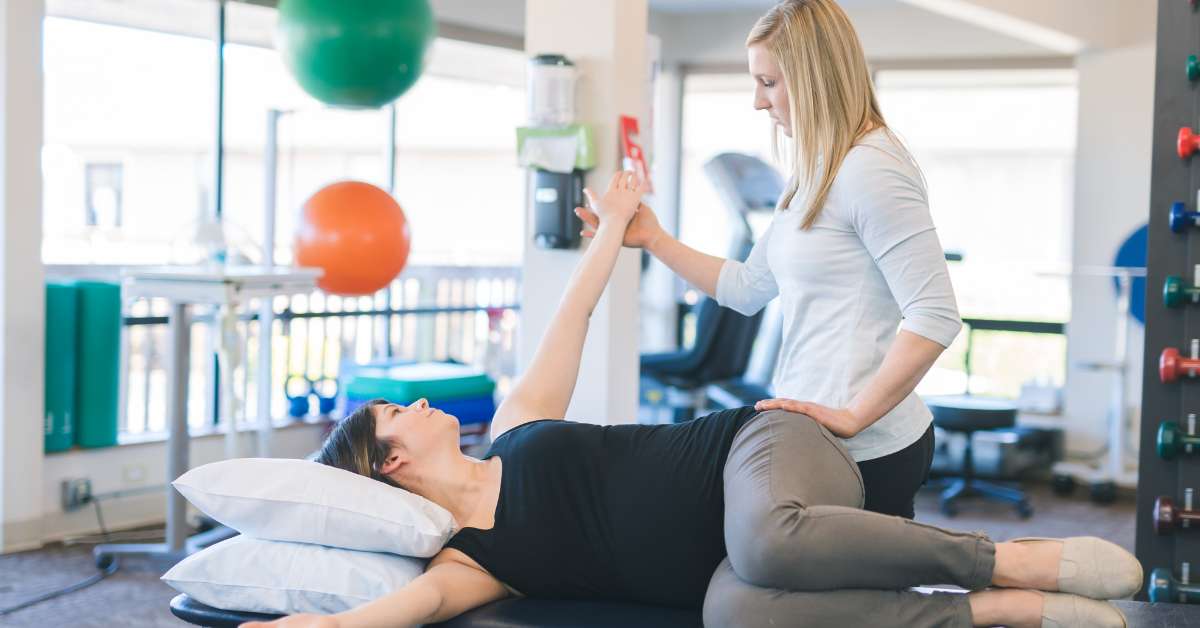
Assisted flexion and abduction patterns
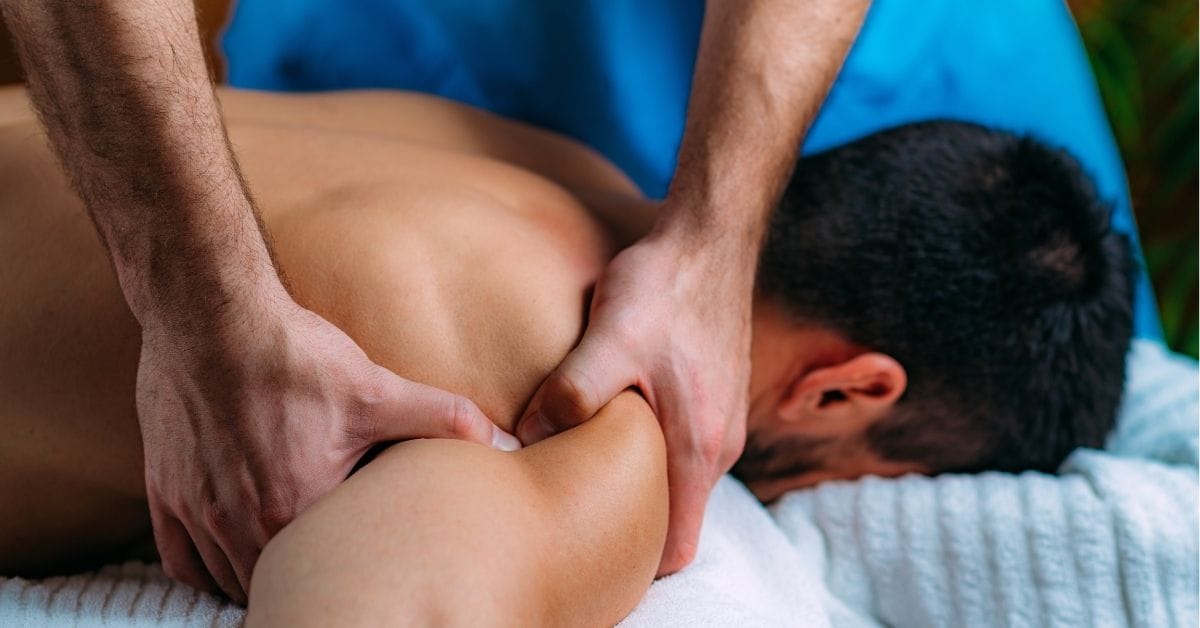
Soft tissue techniques, when appropriate
Regaining smooth, pain-free elevation creates space in the subacromial region.
3. Rotator Cuff Activation
Early strengthening begins in protected ranges.
Common drills:
Isometric external rotation
Side-lying external rotation
Low-load scaption
Supported elevation patterns
Improving humeral head control reduces superior migration during arm elevation.
4. Scapular Stabilization
The scapula must upwardly rotate and posteriorly tilt efficiently to minimize compression.
Exercises may include:
Serratus anterior activation drills
Lower trapezius strengthening
Closed-chain stability work
Controlled scapular retraction patterns
Better scapular mechanics directly reduce subacromial irritation.
5. Progressive Shoulder Bursitis Exercises for Return to Activity
As tolerance improves, structured shoulder bursitis exercises gradually increase resistance and complexity.
Progressions may involve:
Resistance band strengthening
Controlled overhead pressing
Carry variations
Functional pushing and lifting drills
Sport- or occupation-specific retraining
Progression depends on symptom response and strength symmetry, not just time.
Shoulder Bursitis Exercises That Support Recovery
The commonly prescribed shoulder bursitis exercises include the following:
Pendulum swings to maintain early mobility
Wall slides to retrain overhead control
Band external rotation for cuff strengthening
Scapular retraction drills for posture correction
Serratus punches to improve upward rotation
Supported dumbbell elevation in pain-free ranges
Gradual overhead carry variations for load tolerance
Exercises should stay within a tolerable discomfort range and progress gradually in resistance and volume.
When to Seek Professional Care
If pain persists beyond several weeks, worsens with activity, or disrupts sleep, a structured evaluation becomes important.
A comprehensive assessment can:
Clarify what is bursitis of the shoulder versus a rotator cuff tear
Identify mobility or strength deficits
Evaluate scapular movement patterns
Create a personalized progression plan
Working with providers offering the best physical therapy Clearwater ensures your recovery plan adapts as your shoulder improves.

Make Your Shoulder Recovery Structured and Progressive
Shoulder bursitis recovery should not rely solely on rest. It requires a structured plan that progressively improves strength, mechanics, and load tolerance.
At Motion Rx, rehabilitation focuses on detailed movement assessment and milestone-driven progression. Whether you are returning to lifting, sport, or daily tasks, your recovery plan should match your activity demands.
FAQs
1. How long does shoulder bursitis physical therapy take?
Most individuals improve within 4–8 weeks. Full recovery may take 8-12 weeks, depending on severity and activity demands.
2. Can shoulder bursitis resolve without injections?
Yes. Many cases improve with structured rehabilitation and activity modification.
3. What makes shoulder bursitis exercises effective?
Exercises must address the underlying movement dysfunction, not just stretch the shoulder. Strength and scapular control are critical.